Only a day earlier, it had not looked as though the weather would cooperate with our planned tour. We had driven from Seward towards Exit Glacier through almost continuous rain. Clouds hung low over the mountains, and large parts of the landscape repeatedly disappeared into the grey.
At the visitor centre, we therefore chose one of the shorter routes on the valley floor. In the heavy rain, we had little motivation to climb any farther. There would not have been much to see in any case: the glacier and the surrounding mountains were largely hidden by cloud and rain.
The forecast did not leave us especially optimistic about the following day. We had a long boat trip into the Kenai Fjords planned, but by evening we were expecting another day beneath grey skies.
From constant rain to a perfect morning
When we woke the next morning, however, the weather had changed completely. The low clouds and rain were gone. Blue sky stretched over Seward, and the mountains around the town were suddenly fully visible. The contrast with the previous day could hardly have been greater.
Full of anticipation, we set out for the harbour. After a surprisingly eventful 35-minute walk through Seward, we finally reached our boat.
Out through Resurrection Bay
From the harbour, our route first led into Resurrection Bay. Within minutes of leaving the dock, the Black-legged Kittiwakes typical of the region appeared everywhere. They accompanied us for much of the journey, flying low over the water or resting on rocks along the coast.
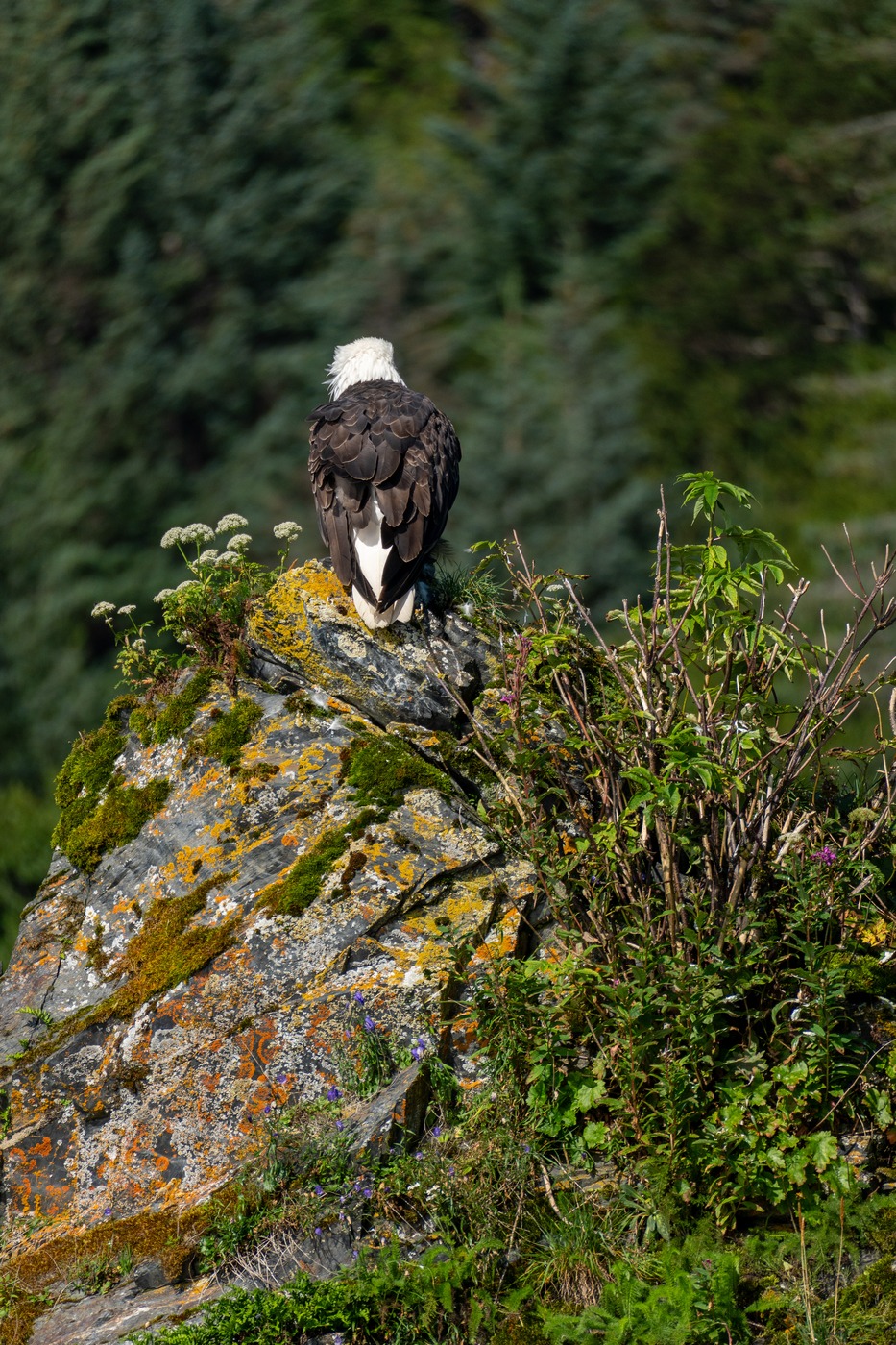
The first larger animals soon followed. A Bald Eagle sat on a coastal rock while, farther out, the first seabirds were already visible on the water.
The farther we left Seward behind, the more impressive the landscape became. Densely forested mountain slopes fell directly into the sea, with snow and ice still lying above them. Small bays repeatedly opened between the mountains.
Soon afterwards, we reached an area with numerous Horned Puffins. The small auks flew back and forth between the rocks and open water and were among the first real highlights of the tour. Puffins are surprisingly difficult to photograph in flight: small, fast and propelled by frantic wingbeats rather than elegant gliding.
Even then, however, we had not completely left the shelter of Resurrection Bay. Ahead of us lay the open Gulf of Alaska.
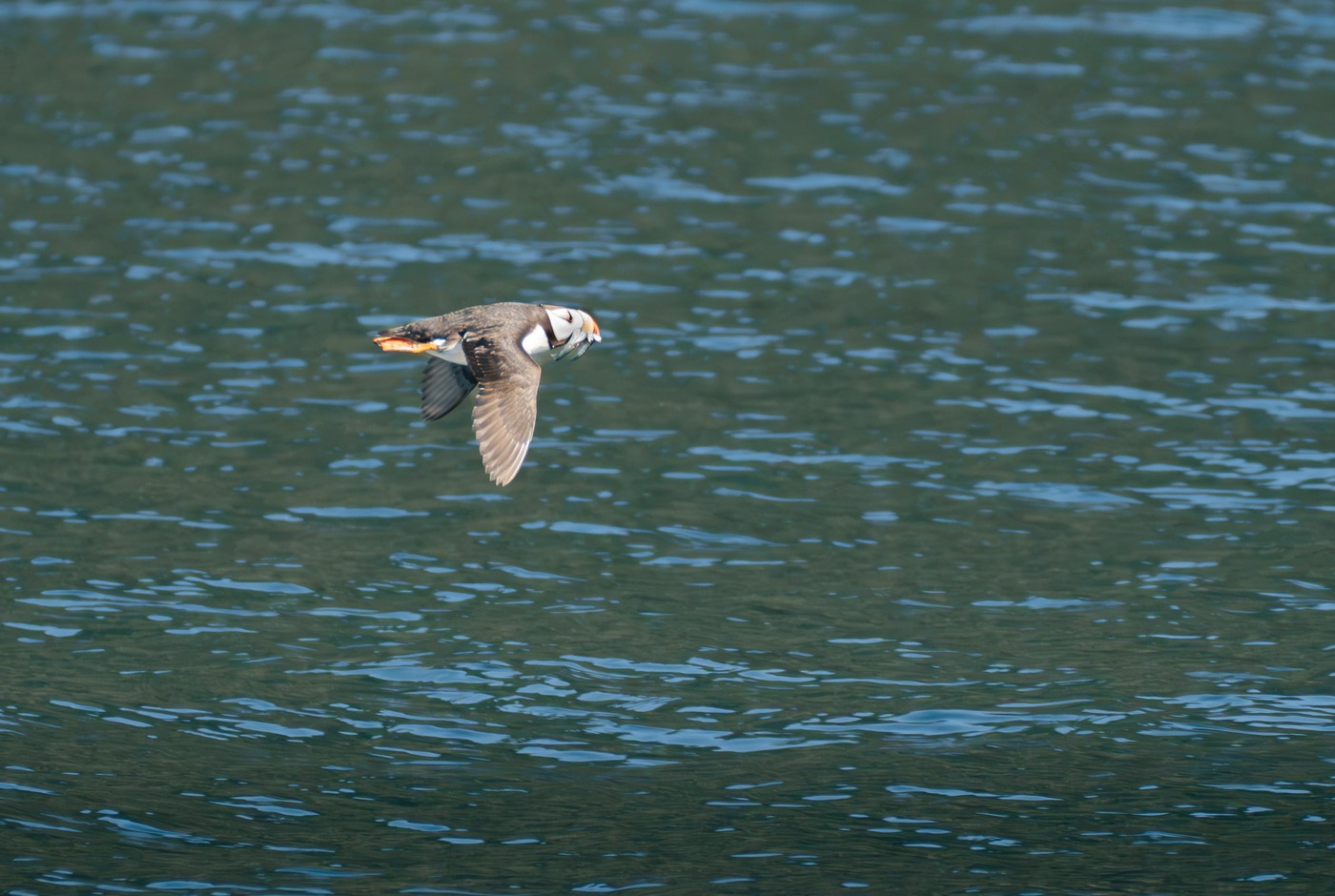
Farther and farther out
As we left Resurrection Bay behind, the scene changed noticeably. The mountains along the coast slowly became smaller, and more and more open water surrounded us.
Our captain continued farther out. And farther. Eventually, those of us on board could no longer work out where we were heading. At first, there was nothing to see in any direction. The coast was now well behind us, and the horizon consisted almost entirely of water.
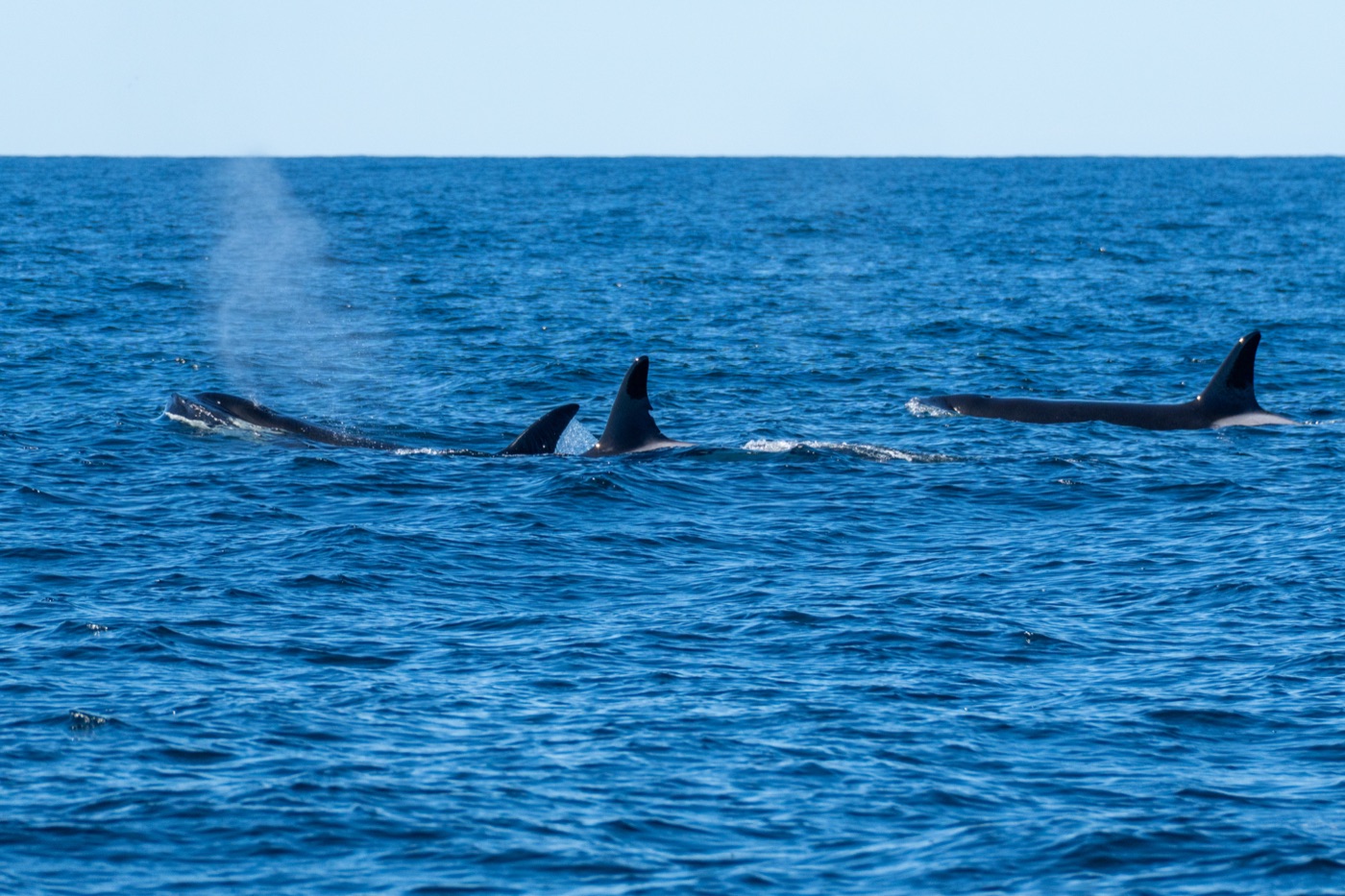
The crew had apparently received information about a sighting. After a while, a dark dorsal fin suddenly appeared at the surface. Then another. Orcas.
We had been lucky enough to find a group of transient orcas. For several minutes, we watched them move through the open sea. Backs and dorsal fins repeatedly broke the surface, disappeared for a few seconds and then reappeared elsewhere.
This was not one of those sightings in which an animal appears once in the distance and immediately disappears again. We were able to accompany the orcas for some time and watch the group move through the water. It was now clear why our captain had taken us so far into the open ocean.
After several minutes, we finally left the orcas behind and turned back towards the coast.
A different moment in Aialik Bay
Our next destination was Aialik Bay. After the open Gulf of Alaska, the mountains drew closer again. The landscape narrowed, and the glaciated slopes of the Kenai Peninsula increasingly defined the view.
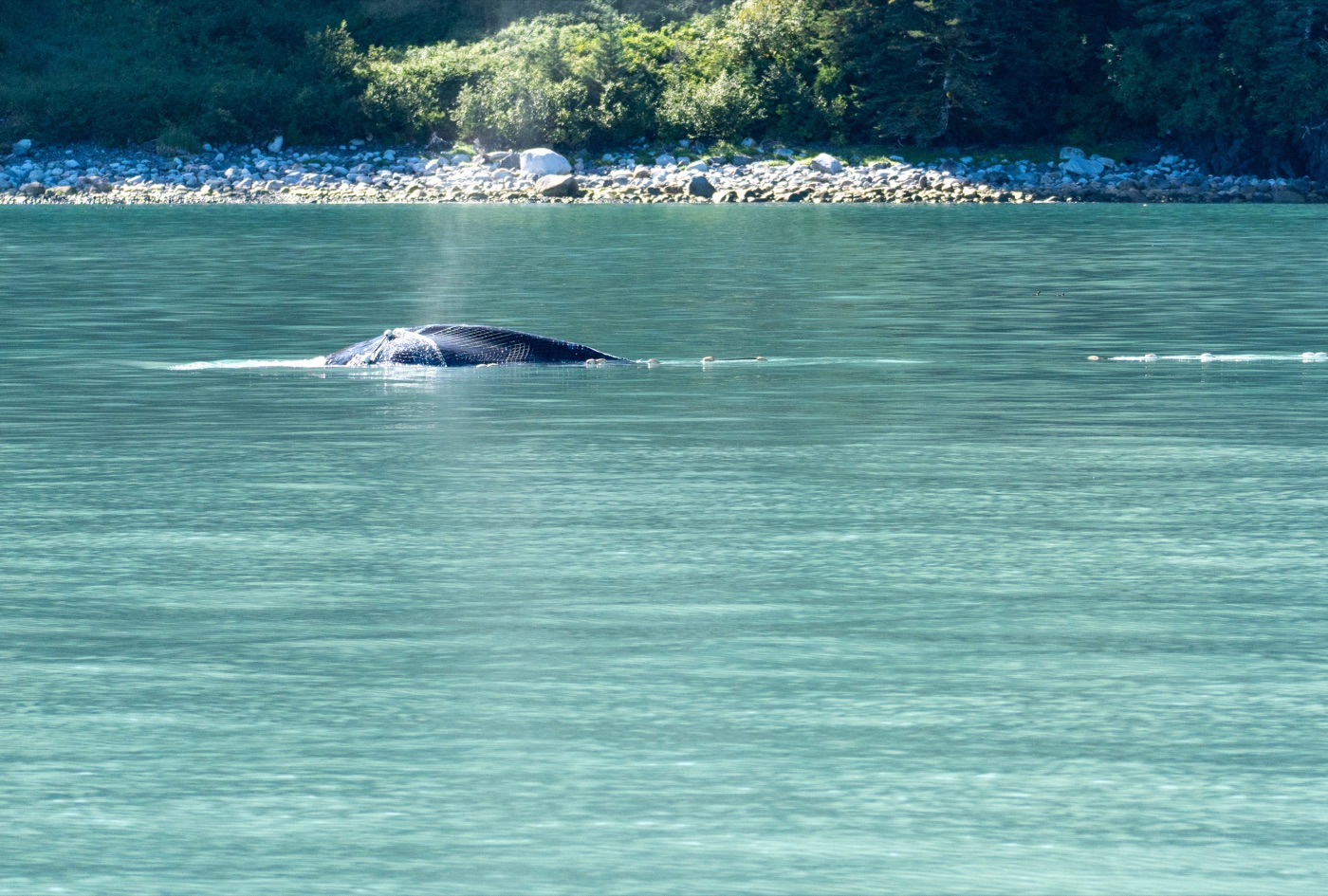
Until then, one extraordinary sighting had followed another that morning. The contrast with what we saw next was all the greater. A Humpback Whale in the water had become entangled in fishing gear.
After all the beautiful encounters that had come before, it was a sobering sight. An animal normally associated with one of the most impressive wildlife encounters was suddenly visibly in difficulty. The responsible authorities were notified, and we forwarded several photographs that showed the situation as clearly as possible.
It was certainly not the moment from the day that we would most like to remember. Even so, it was part of what we had seen and a clear reminder that the sea here means more than spectacular landscapes and wildlife. Eventually, we continued our journey. The glaciers lay ahead.
Below Holgate Glacier
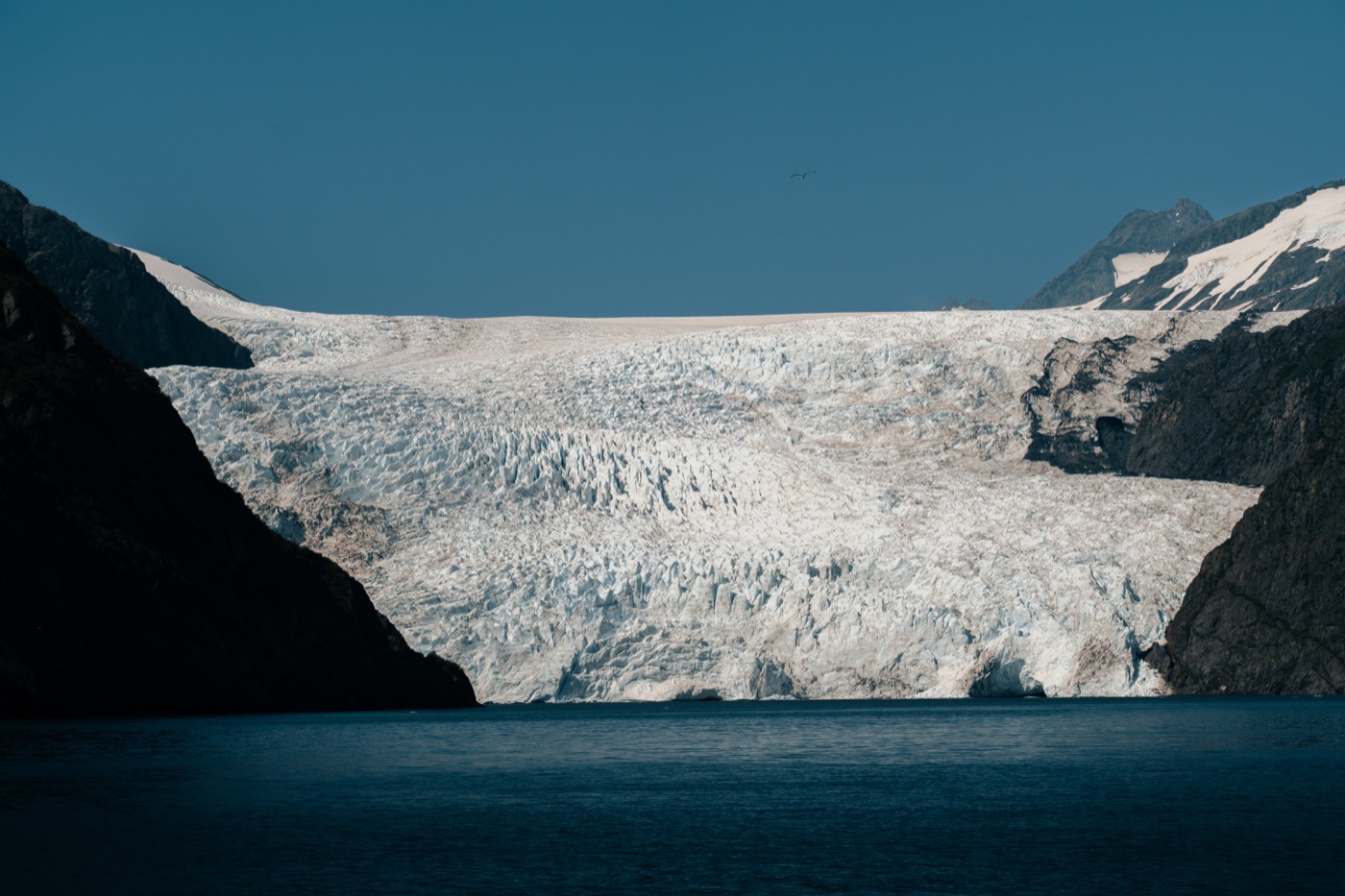
The farther we travelled into the fjords, the more the landscape changed. Forest and dark mountain slopes increasingly gave way to bare rock, snow and ice. Eventually, we reached Holgate Glacier.
After the many wildlife encounters, this was a completely different highlight of the day. The massive glacier face rose in front of us, with the ice extending far back into the mountains. Other glaciers lay across the surrounding slopes, including Little Holgate and Surprise Glacier. Small pieces of ice drifted on the water, while almost nothing but rock, snow and ice was visible above us.
Only here did the scale of the landscape become clear. From a boat, even a large glacier can be surprisingly difficult to judge. Without houses, roads or trees for comparison, almost every familiar measure of size is missing. Only the small boats in front of the ice or individual rock formations reveal how large the mountains and glaciers really are.
The boat remained in front of the ice for some time. After orcas, puffins and eagles, no single animal was suddenly at the centre of our attention. It was simply the landscape itself.
Sea otters on the way back
Eventually, we had to begin the journey back towards Seward. The return trip was far from quiet, however.
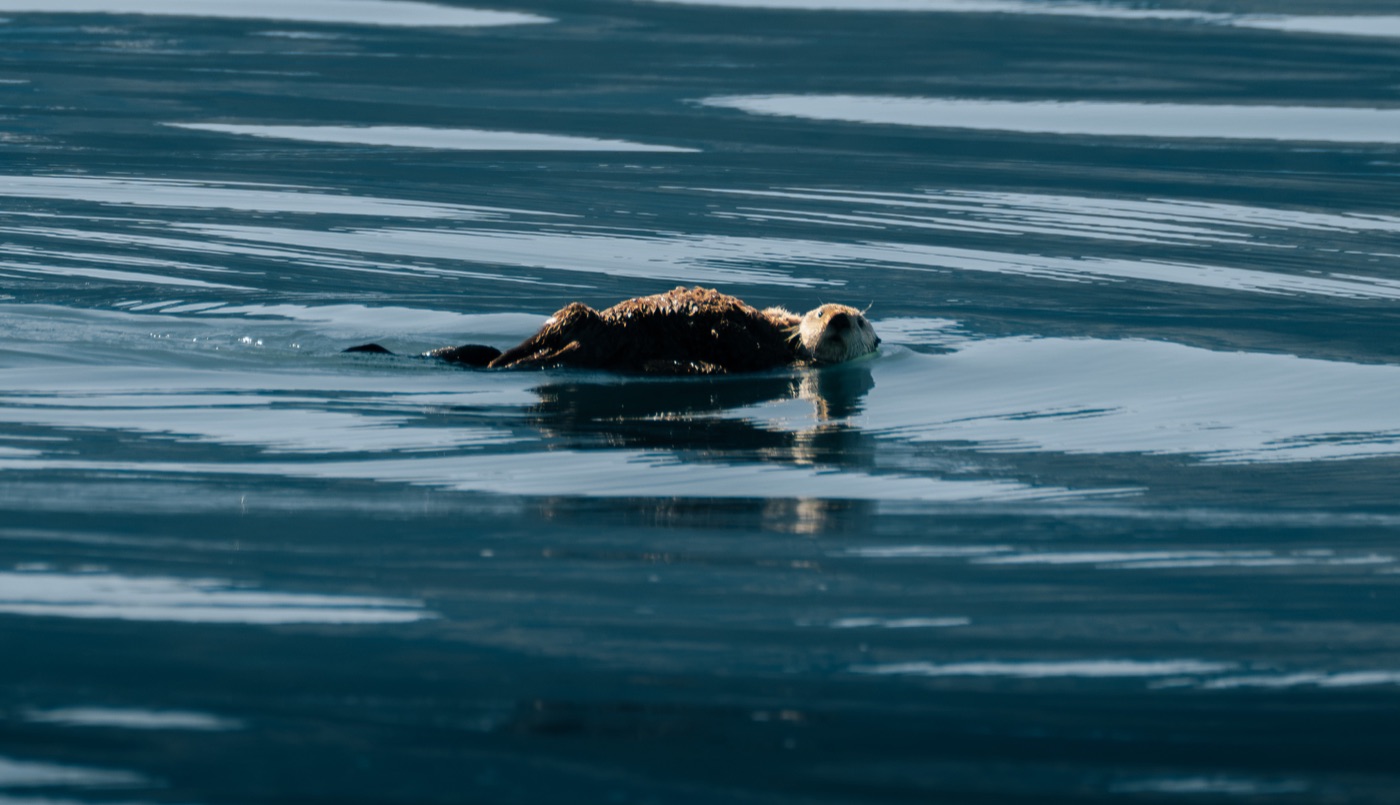
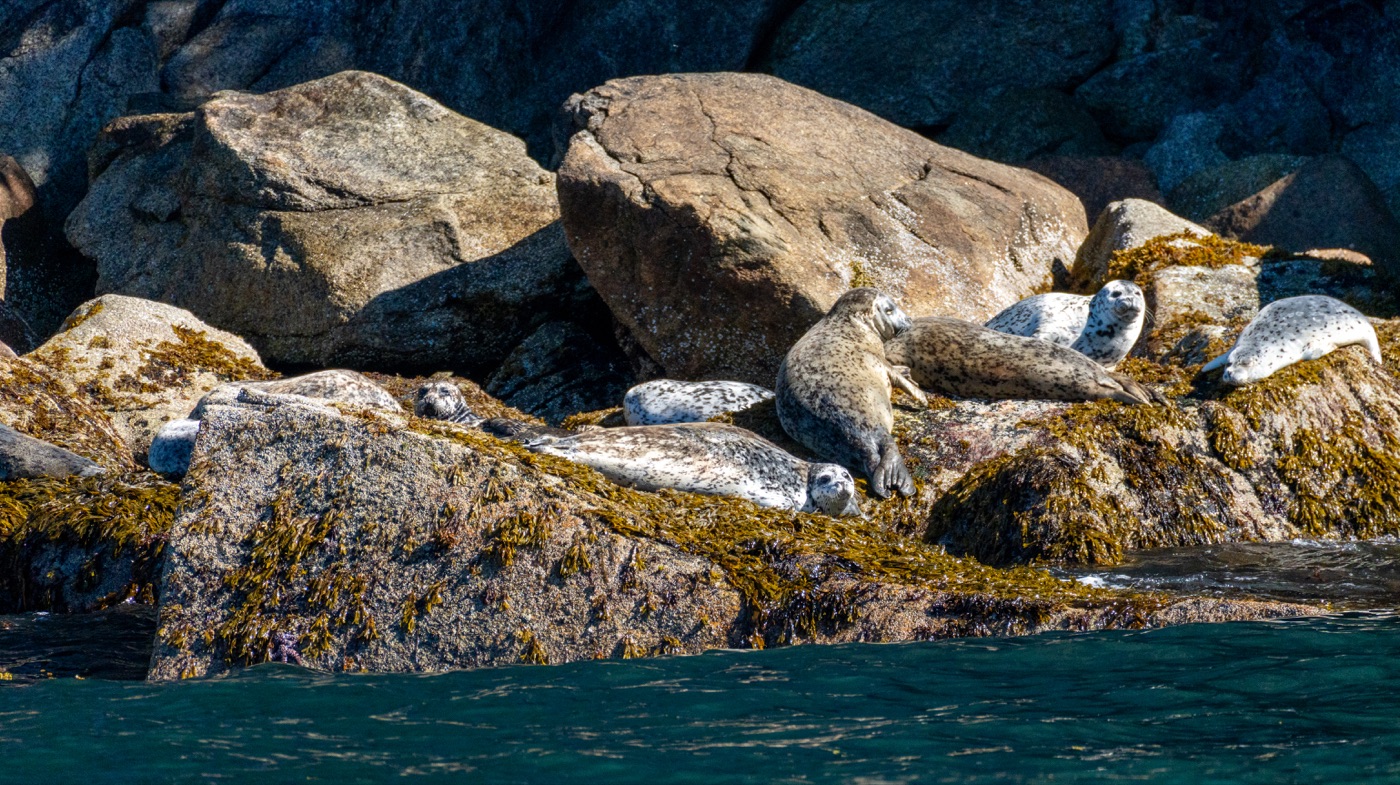
We encountered Harbor Seals among the fjords, and several sea otters eventually appeared on the water. Some lay almost motionless on their backs and drifted between the waves.
After the massive Holgate Glacier, the encounter felt like a quiet close to the day. Instead of distant orcas in the open Pacific, small sea otters now floated in front of us, framed by the mountains of the Kenai Fjords. Numerous seabirds accompanied us again as we continued towards Resurrection Bay.
There was still one final highlight. Several large silhouettes appeared overhead as four Bald Eagles circled above the boat at the same time. After everything we had already seen that day, it was a fitting conclusion.
When we finally returned to Seward, the open Gulf of Alaska, glaciated fjords and an almost unimaginable variety of wildlife lay behind us, from puffins and sea otters to orcas and Humpback Whales.
Only about 24 hours earlier, we had stood in constant rain at Exit Glacier and wondered whether our tour the following day would amount to anything at all. A day later, it had become one of the most memorable days of our time in Alaska.