On 6 September, I set off for the Ulcinj Salt Flats at around 6:15 in the morning. I was hoping not only for pelicans and flamingos, but also for waders and migrants travelling between Europe and Africa. I had rented a bicycle especially for the journey. At a still comfortable 24 to 25 degrees, I rode towards the salt flats on a bike that was a little too small but otherwise serviceable.
After about three and a half of the five kilometres, one of the pedals suddenly fell off. I could not repair it on the road, so I had to cover the remaining kilometre and a half using just one pedal and coasting whenever possible. Even so, I reached the salt flats in time for the opening at around 7:00 and was the first visitor that morning.
Among abandoned buildings and the first birds
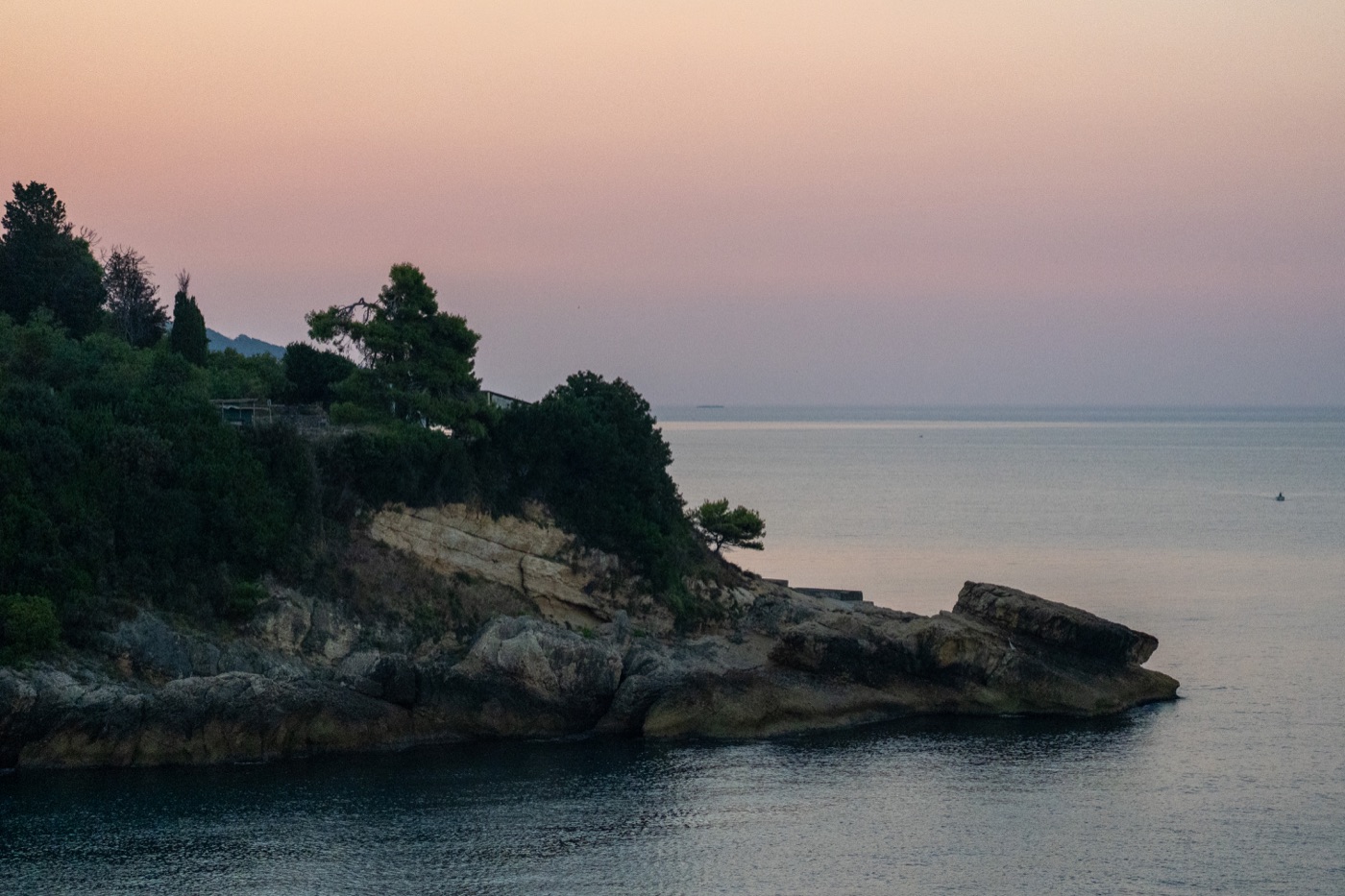
For the first few metres, the salt flats felt almost like an abandoned industrial site. Apart from several old and partly derelict buildings, there was initially little to see. Only after a few hundred metres did I reach the first basin on the left.
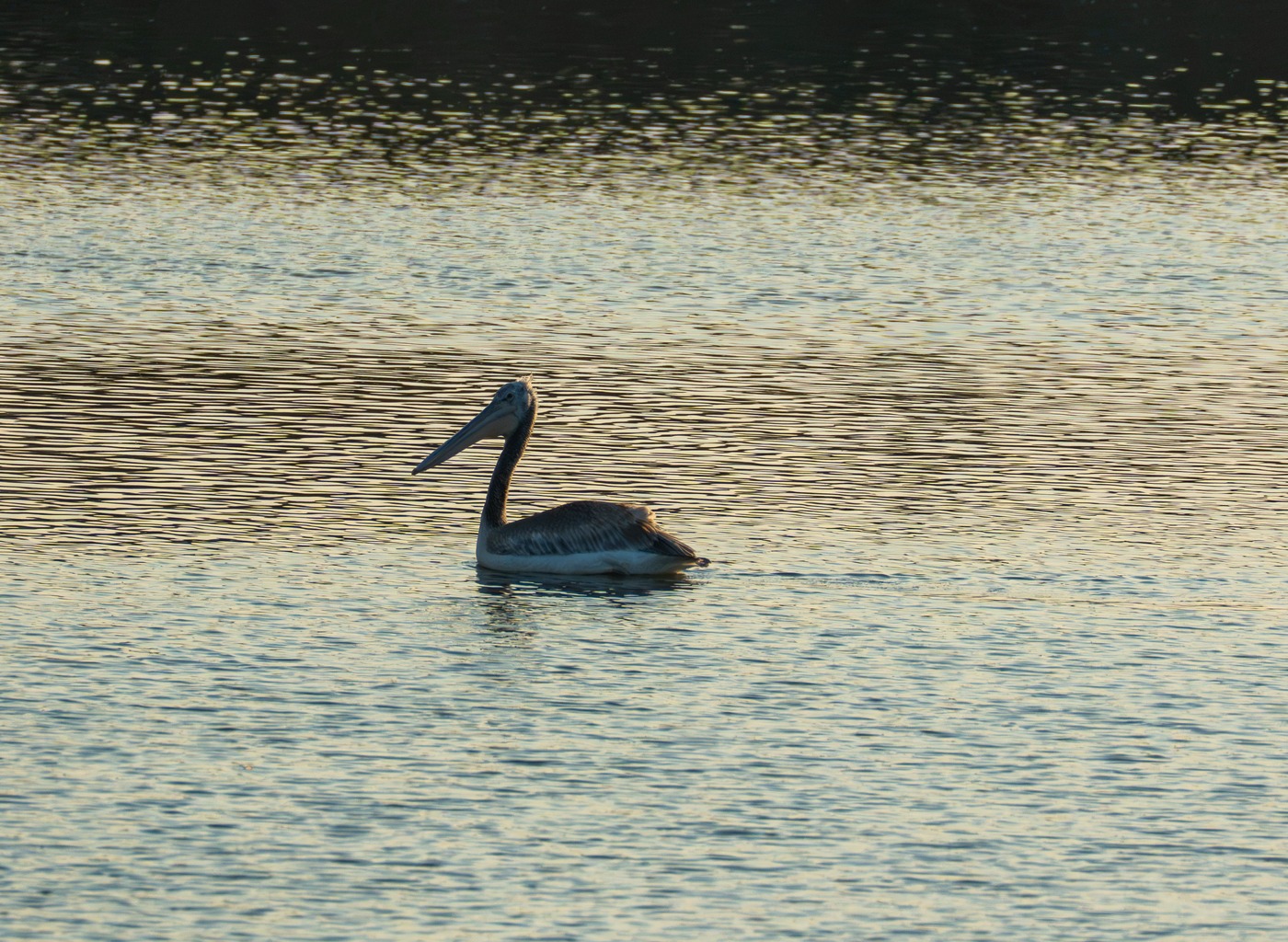
A young Dalmatian Pelican was sitting there, a species I had wanted to see for some time. In the same area I also found Northern Shoveler and Common Pochard. Larger groups of Pygmy Cormorants and Little Egrets were gathered around the edge of the basin.
Finding the pelican so early was promising. Even so, my hopes of seeing the expected flamingos began to fade because the salt flats beyond the first basin appeared largely empty. Only after checking the map again did I realise that I had not yet reached the main observation basins.
Across the salt flats to Jezero 1
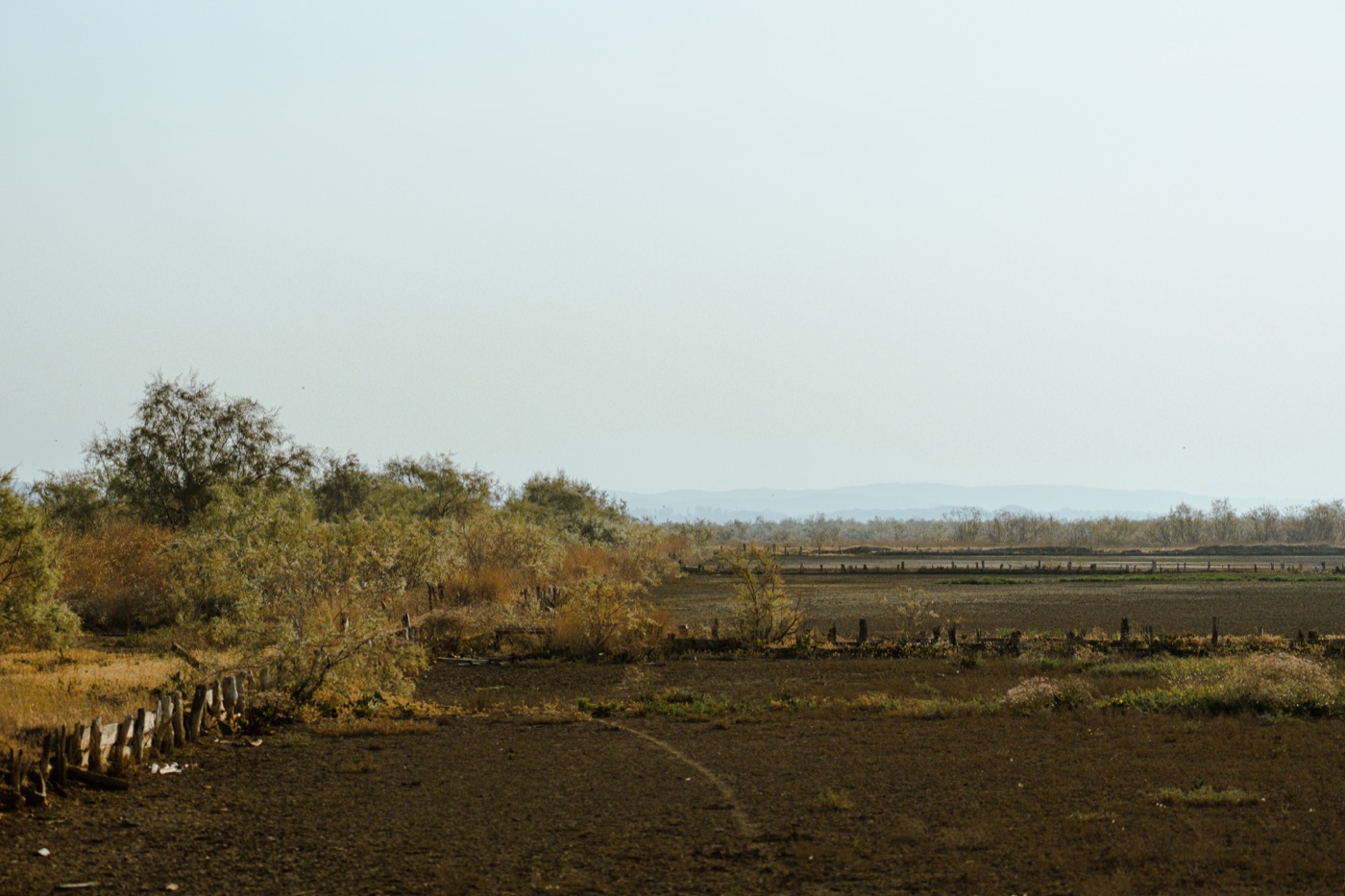
From there, the route crossed dry, pale salt ground. The landscape became increasingly open and sparse. At the same time, the sun rose higher and the temperature was already approaching 28 to 30 degrees. On the exposed tracks, little remained of the pleasant coolness of the early morning.
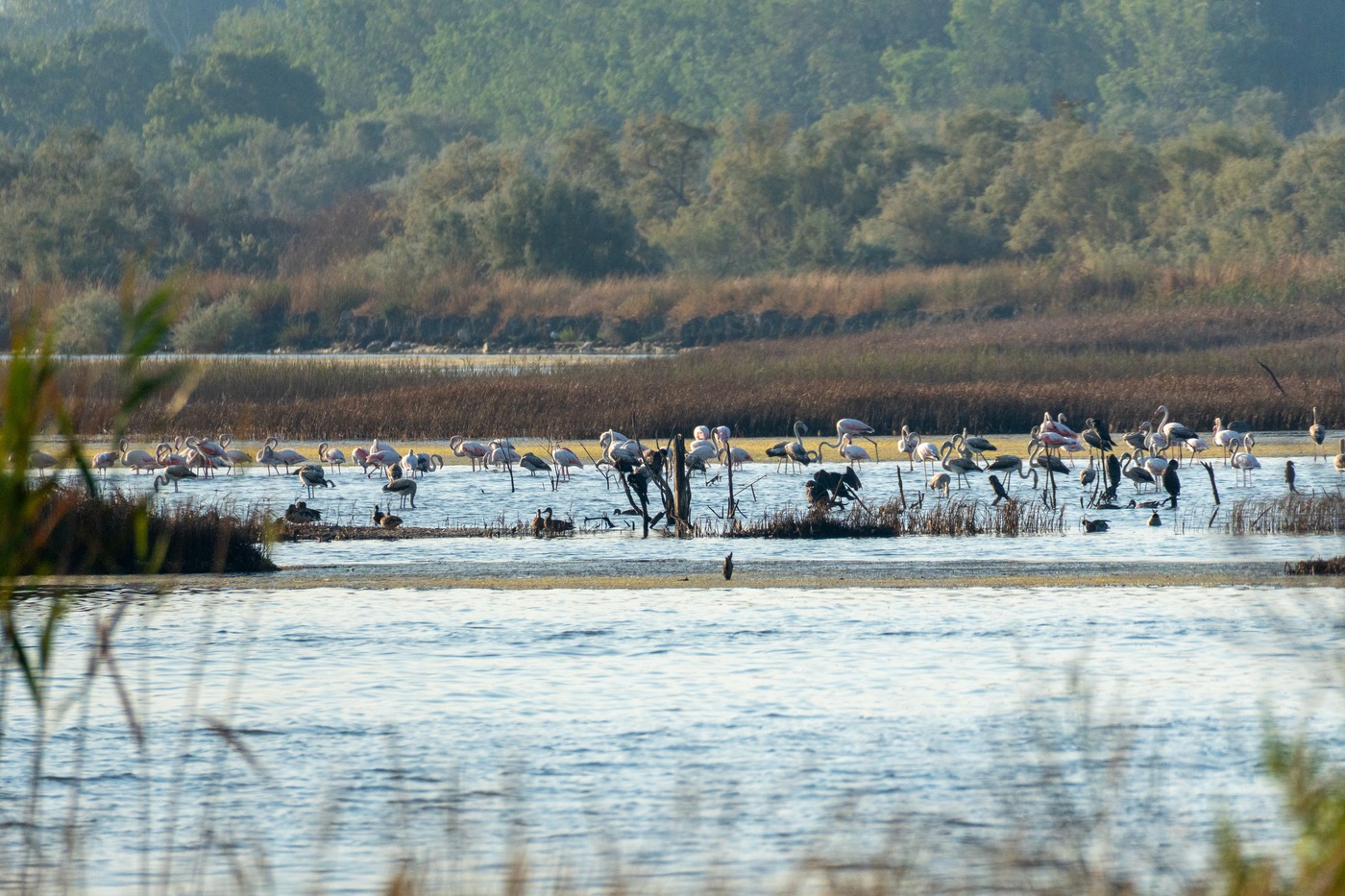
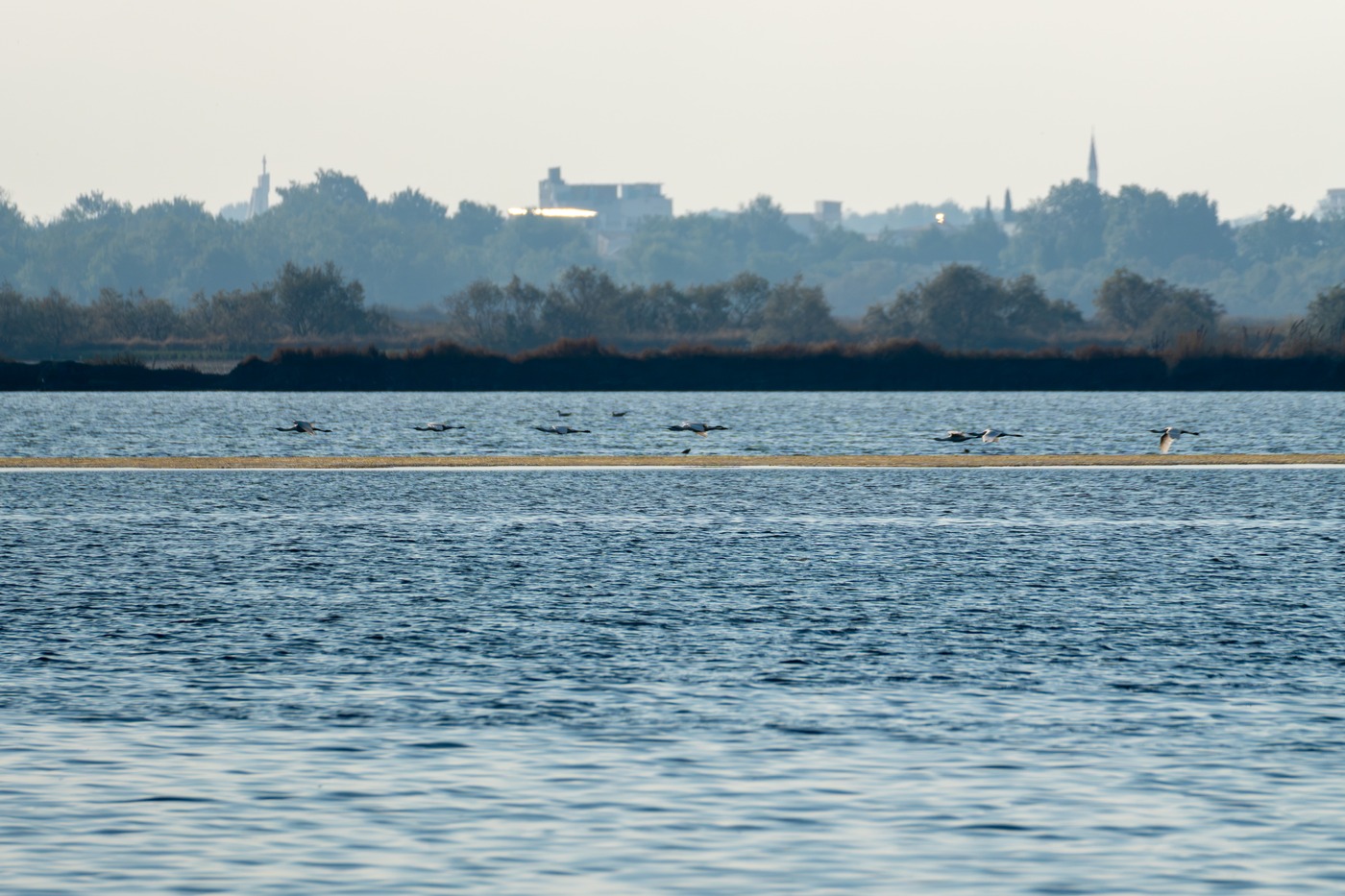
Eventually I reached the large Jezero 1 basin. From some distance away I could already see the first flamingos taking flight. When I arrived at the water, I was not disappointed. More than 100 flamingos stood far out in the shimmering light. The distance and increasing heat made them difficult to watch and photograph at times, but their number and the movement of the flock defined the open landscape.
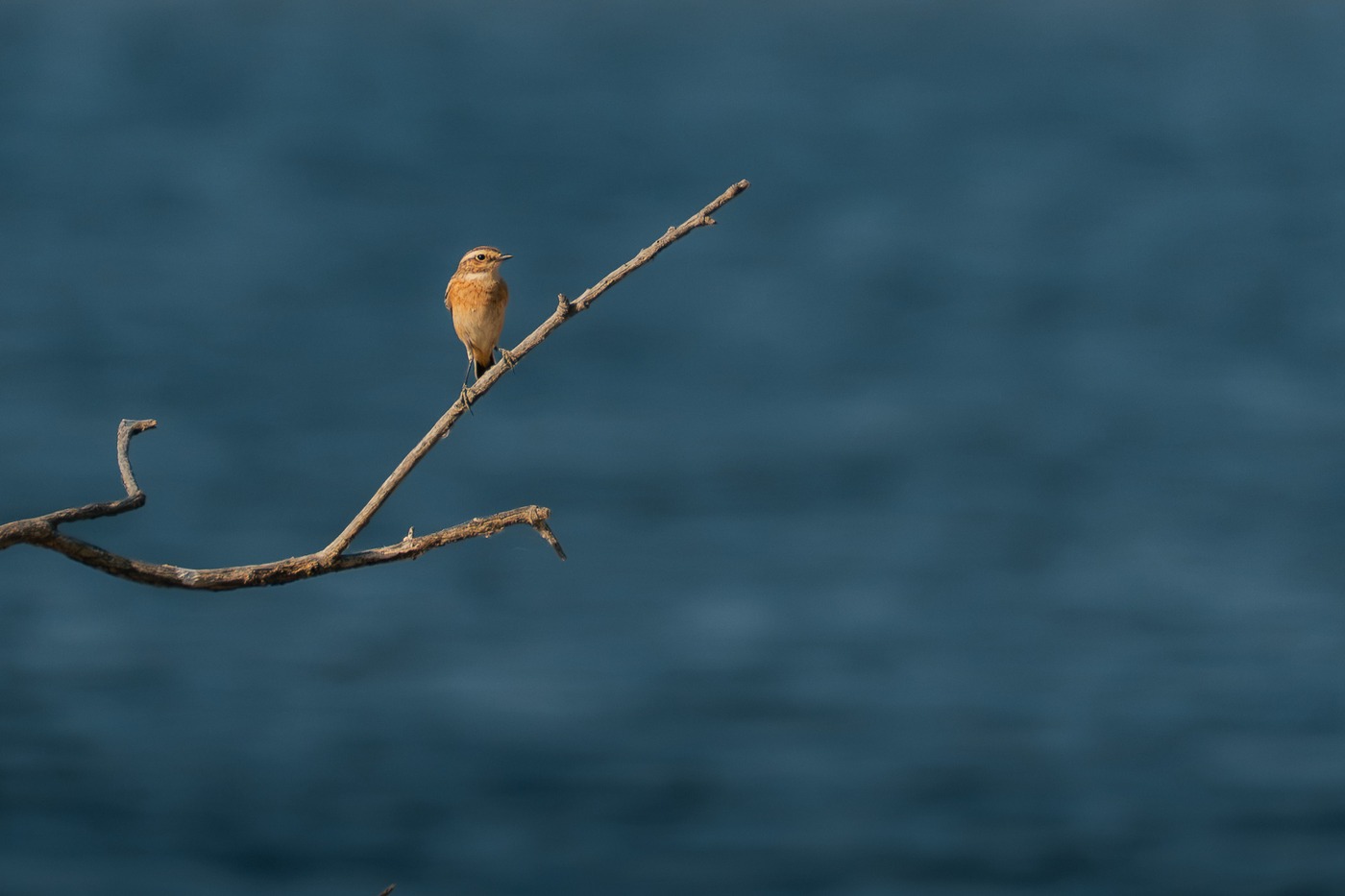
Among them, the long bills of several Eurasian Spoonbills looked almost unreal. Numerous Little Egrets were spread across the area. Later I repeatedly saw small groups of Eurasian Thick-knees, together with smaller songbirds and waders along the dry margins and shallower sections.
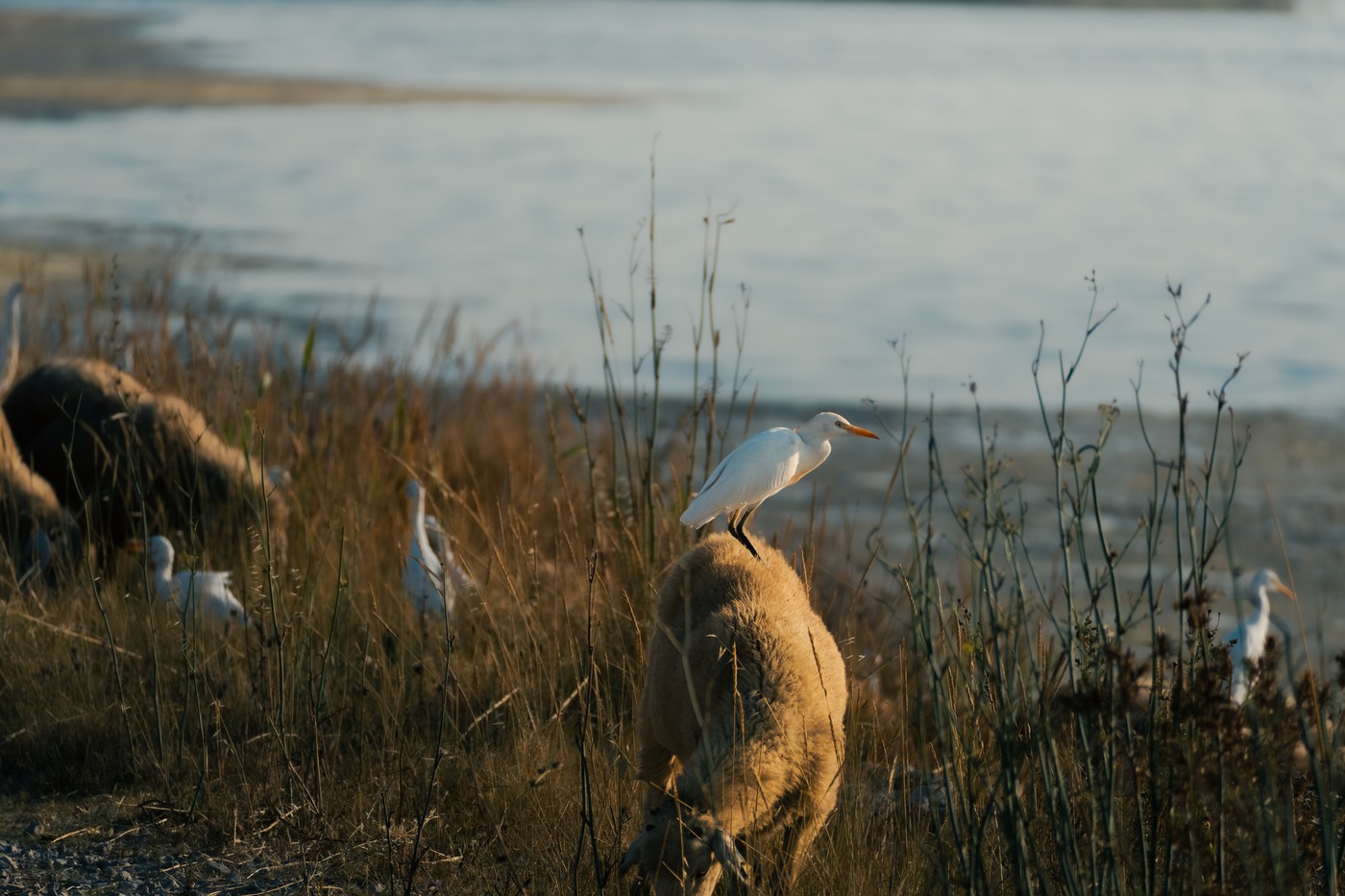
Cattle Egrets on sheep
As I continued along the edge of Jezero 1, I came across a small group of sheep. Several Western Cattle Egrets were sitting on and among them. I had not expected this species that morning, certainly not in such numbers or in such direct association with the grazing animals.
The egrets appeared to use the sheep as raised perches and stayed close to the flock. It was one of the morning's most unexpected observations and quite different from the distant flamingos on the open water.
Later, as I turned onto the embankment between Jezero 1 and Jezero 2, I encountered a young Little Egret that did not immediately fly away. Because I could not tell whether it was simply inexperienced or possibly weakened, I kept my distance and stayed only briefly.
The long way back
I then began the roughly four-and-a-half-kilometre return to the entrance. By now the sun was much higher, and the route followed the basins and salt flats without any meaningful shade. With every kilometre, I became more covered in salt, dust and heat.
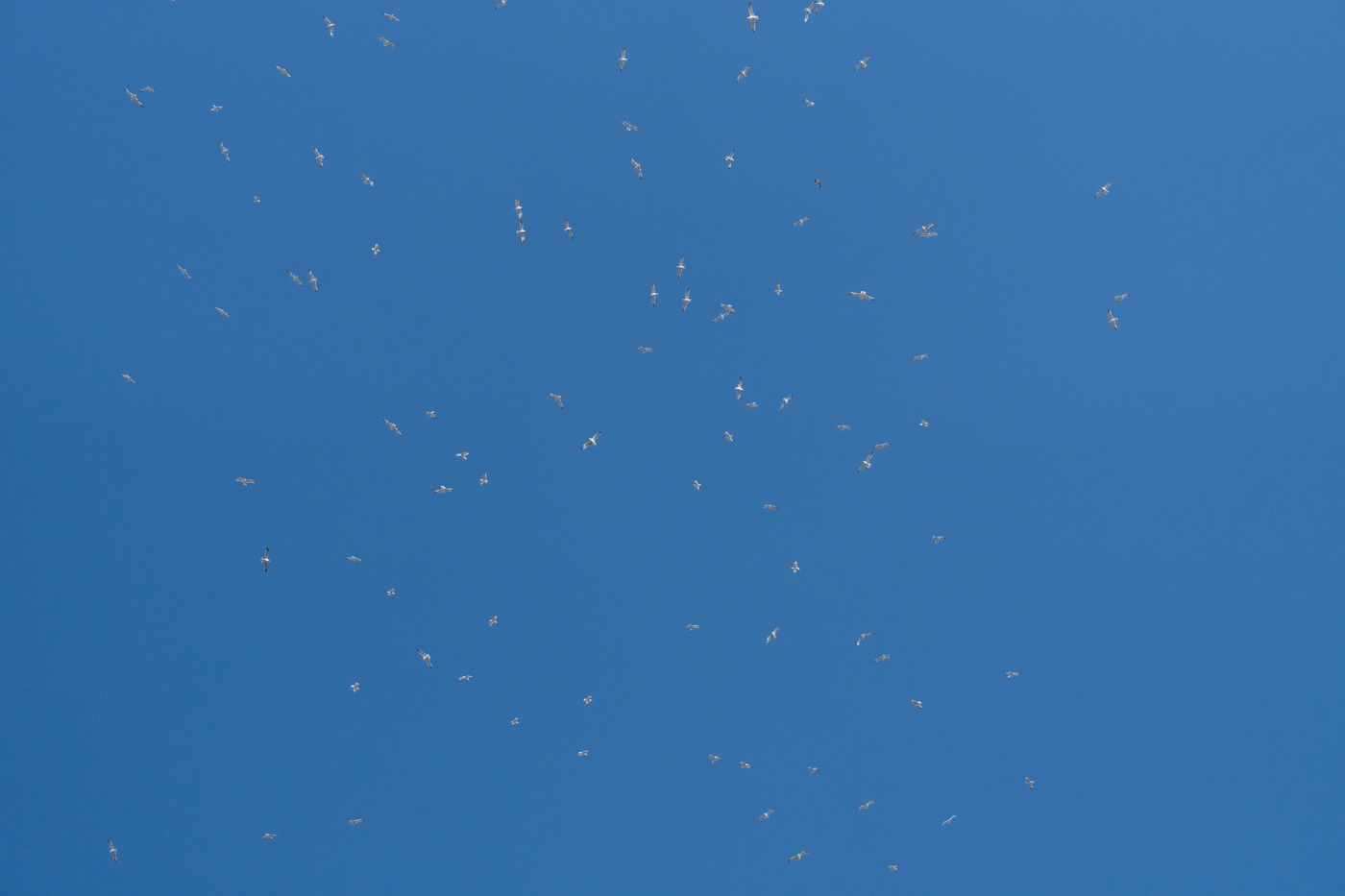
Shortly before the entrance, I had one more piece of luck. Several Bee-eaters took flight, and well over 100 gulls gathered overhead. The morning ended with one final large movement in the sky.
By the time I reached the entrance again, my list held 28 observed species, including 14 new ones. The Dalmatian Pelican, flamingos, Eurasian Spoonbills and Western Cattle Egrets made the outing a successful morning despite the heat and the broken bicycle.
The bicycle problem was eventually solved as well. A member of staff at the entrance screwed the fallen pedal back into place. I could therefore ride the five kilometres back to Ulcinj with two working pedals, a considerable relief as the temperature continued to rise.
Finding your way around the salt flats
During my visit, two smaller basins lay on the left about 500 metres from the entrance. This was where I saw the young Dalmatian Pelican.
The main route through the salt flats begins on the right. After roughly two to two and a half kilometres, the first view opens across Jezero 1, where the flamingos were gathered that morning. The next large basin is approximately another two kilometres farther on.
These observations refer to my visit on 6 September. Water levels and the places used by the birds can change.